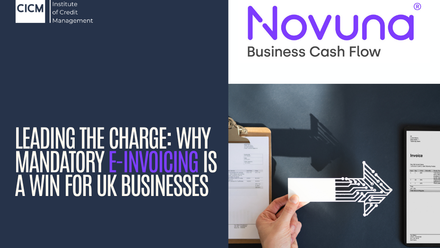
Novuna E-invoicing Whitepaper
From April 2029, e-invoicing will become mandatory for UK B2B and B2G transactions — a shift that will directly affect how credit teams issue, track and reconcile invoices. This whitepaper from Novuna Business Cash Flow explains what e-invoicing actually means (structured, machine-readable data exchange — not just emailing a PDF), how it differs from the accounting-software processes many SMEs already use, and why the distinction matters for credit management in particular.
Drawing on interviews with UK accountants and a survey of 1,000 SME decision-makers, the report highlights the invoicing-related delays currently disrupting cash flow — including invoices stuck in approval workflows, repeat requests for copy invoices, and chronically slow payers — and sets out the case that structured e-invoicing can reduce disputes, cut administrative burden, and improve payment predictability well ahead of the 2029 deadline.
Key topics covered:
- The origins of e-invoicing and the global models (two-corner through to five-corner)
- Why PDF invoicing doesn't meet the coming requirement
- Current SME cash flow pressures and late-payment data
- Practical steps for preparing ahead of 2029